Wallpaper
We have many customers who want to choose their own paper and have us hang it for them and the guide information below will help you choose the right paper for you and your home. We are more than happy to help you with advice about what will be best for your project.
Wallpaper can come in a huge variety of styles, textures, materials and finishes that will allow you to truly make your space your own. It can also be a daunting thing to know what you are looking at choosing to make sure it is right for your space ... and that's before you even think about choosing a pattern or image on the paper!
Each roll of paper should come with a set of standard code pictograms on it that will give you information about the paper and it's characteristics. This will allow us to know how it should be hung, how durable it will be once hung, how it can be cared for and then how it can be removed once it's time has come to be replaced. You should also have the all important Batch Number on each roll. Ideally you want every roll of paper that is being used in a project to have the exact same Batch Number so that the colours match perfectly. There will be variations between batches of even the same paper.
There are five groups of symbols that we are going to cover here. Washability, Light Fastness, Removability, Pasting and Pattern Matching.
Let's start with the symbols for how Washable the paper could be. This is a guide for how easy it will be to care for the paper once it is up on your wall.
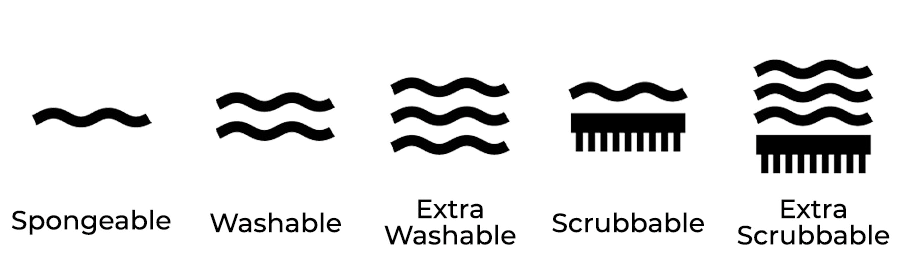
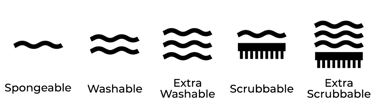
Spongeable: A single wavy line indicates that your wallpaper is Spongeable. This is the lowest washability rating meaning you should use a lightly damp sponge to very gently wipe the surface of the paper. This should be done with no chemicals and just water.
Washable: 2 wavy lines indicates a Washable wallpaper that offers slightly more durability compared to a spongeable paper. It still needs to be treated gently as applying excessive moisture or pressure may mean you rip or tear the paper
Extra washable: 3 wavy lines indicates that the paper is Extra Washable. Because this paper it more resistant to moisture it can be used in kitchens and bathrooms, although it is not waterproof! Hanging it next to a sink or shower is likely to result in damage to the paper.
Scrubbable: A Scrubbable paper is more durable than washable and has a symbol with one wavy line and a scrubbing brush. Can be cleaned with a sponge, cloth or gentle brush using water or mild detergents. Remember it is still paper and too much pressure or too harsh a chemical cleaner will result in damage to the paper. Oil and fat stains will still be hard to remove even if worked on immediately.
Extra scrubbable: 3 wavy lines and the brush symbol mean Extra Scrubbable wallpaper. This paper can withstand the most pressure and use of chemical cleaners but it is still paper and you may find tougher stains such as oils and fats are still hard to remove without damaging the paper.
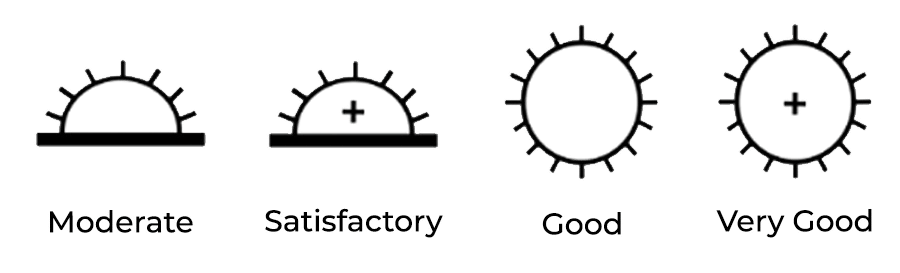
Light Fastness refers to how well your wallpaper retains colour when exposed to sunlight. Over time wallpapers, like any material exposed to sunlight may fade. Light fastness helps determine which wallpaper will maintain its colour longer in areas with higher sun exposure.
The wallpaper symbols indicating light fastness are as follows: moderate, satisfactory, good, and very good. For a wall that receives lots of natural sunlight, such as one near a window, it’s advisable to choose a wallpaper with a high light fastness rating.
Wallpaper Removability.
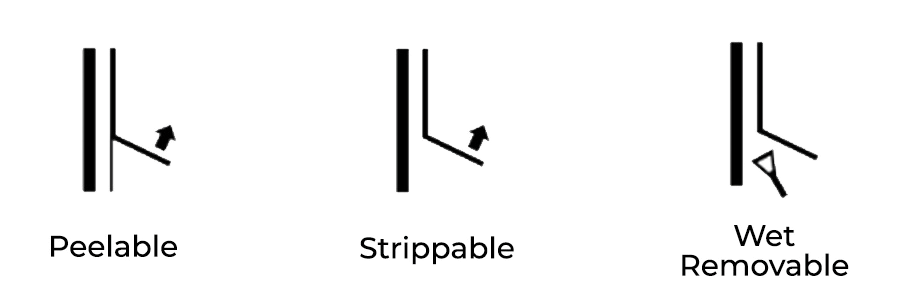
These symbols indicate the removal technique for that wallpaper. Understanding removing your wallpaper in the future can help when it comes time to remove or replace the paper. There are three primary wallpaper removal techniques and these are all 'best case' scenarios when it comes to removal and will depend on how the paper was hung and what paste etc was used to do it as well as the condition of the wall/material underneath the paper.
Peelable: This refers to the ability to dry-peel the decorative surface and backing from the wall, leaving a continuous layer of the substrate. This remaining substrate can serve as a liner for applying new wallpaper.
Strippable: Strippable wallpaper allows you to remove the entire wallpaper in one strip while it is dry. When removing the wallpaper, both the front and back layers will come off the wall simultaneously.
Wet removable: This type of wallpaper can only be taken off the wall with a liquid solution like a stripping agent or by soaking it with water. Then, you’ll have to manually scrape off the excess paper.
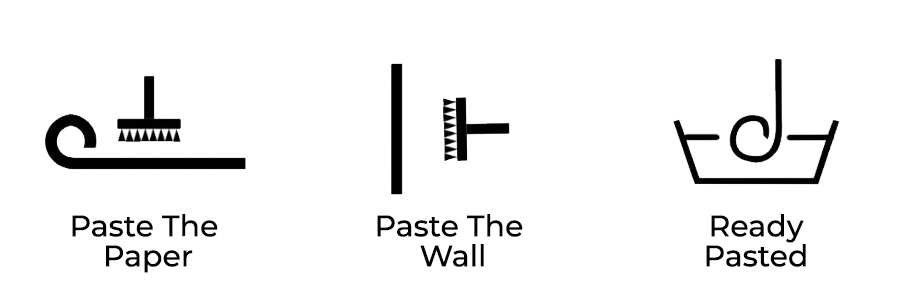
Paste Instructions for standard wallpaper have 3 different symbols. It's important to understand the methods used for each one to ensure the paper hangs correctly on the wall and avoids issues.
Paste the Paper means applying paste directly to the back of the wallpaper before allowing it to soak in to the paper for the recommended time. This allows the paper time to expand with the moisture in the paste and it is then ready to hang on the wall.
Paste the Wall or wallpapers labelled as 'Non-Woven' means you can apply the paste to the wall and then hang the wallpaper.
Ready Pasted means the paper already has paste on it and when it is placed in water the paste is activated and ready to hang on the wall.
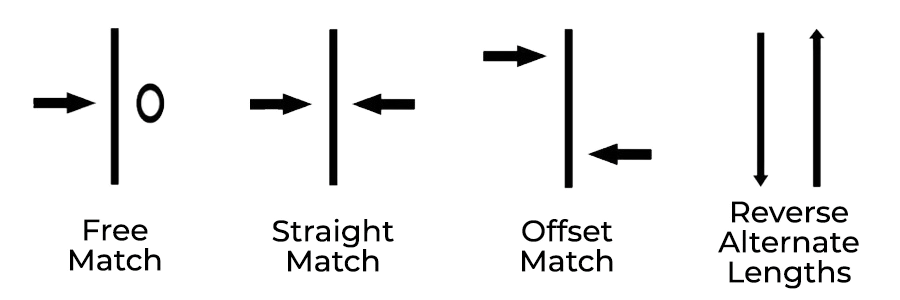
Pattern Matching is really important for hanging patterned papers. Pattern match refers to how the patterns align horizontally between adjacent strips of wallpaper and allows you to plan what needs to go where.
Free match design means no alignment is necessary. Adjacent pieces of paper will automatically line up. Free match results in the least amount of wasted paper compared to other available pattern matches.
Straight match means that the design aligns horizontally across adjacent strips. The pattern will line up from left to right and is quite straightforward to do.
Offset match design means that the pattern will be lined up with a part of the pattern that is lower down on the next strip. There will also be a measurement for how much the 'offset' measurement will be. Offset match wallpaper typically results in the most waste because of the way the pattern is aligned.
Reverse alternate lengths is a technique commonly used with specific patterns to ensure that the pattern works correctly when hung on the wall. Vertical striped patterns are a common example of this.